How to Spot Fake Vinícius Júnior Cards, Slabs & Autographs
The authentication checklist for Vinícius Júnior cards: the tells on counterfeit raw cards, how to catch a tampered or fake slab with a cert lookup, what a real certified autograph looks like, and the five checks to run before you pay.

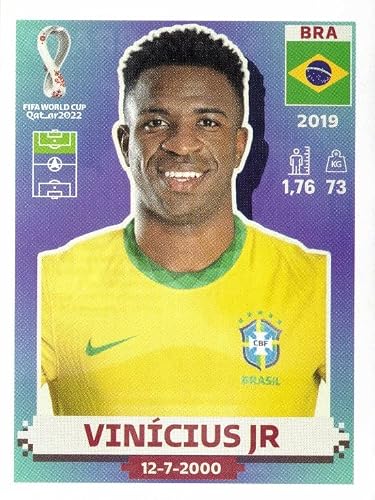


Counterfeits follow the money, and Vinícius Júnior has plenty of it. His flagship rookie, his numbered chrome parallels and his autographs are all now expensive enough to be worth faking — which means at some point you will be shown one. This guide is the checklist to run before you pay.
Two honest limits up front. First, nobody — not us, not anyone — can authenticate a card from a listing photo, and any page that tells you otherwise is selling confidence it doesn’t have. Second, we quote no prices anywhere on this site; the “too good to be true” test below works off sold listings you check yourself, which is the only honest benchmark there is.
The one rule
Where the money is real, buy the slab.
A card encapsulated by PSA, SGC or BGS has been examined by people whose business depends on getting it right, and the holder makes a swap obvious. Every other method of protecting yourself is a probability play; this one moves the risk onto someone else’s balance sheet. Everything below exists for the cases where you can’t or won’t do that — raw cards, bargains, and slabs you still need to verify.
Part 1 — Counterfeit raw cards: the tells
Compare against a known-genuine copy
This is the highest-yield check and almost nobody does it. Pull up several listings of the same card, same set, same year and look at them side by side with the one you’re considering. Counterfeits are copies of a copy: borders drift, colours sit slightly off, the back’s colour registration is muddy, the foil is flat where it should burst. You don’t need to know what “correct” looks like in the abstract — you only need to notice that this one doesn’t look like the other twelve.
The print pattern
Genuine trading cards are commercially printed, and under a loupe or a phone macro lens the ink resolves into a fine, regular dot pattern. A card that has been scanned and reprinted on a consumer printer usually gives itself away here: soft edges, visible pixel structure, banding across flat colour, or type that looks fuzzy rather than crisp. Zoom in on the smallest text on the back — the fine print is where cheap reproductions fall apart first.
Size, cut and trimming
Modern trading cards are cut to a standard 2.5 × 3.5 inches. Measure. A card that comes up short on either dimension has been trimmed — sometimes to hide a damaged edge, sometimes to sharpen corners before grading. Look at the cut itself too: a factory edge is clean and consistent along its whole length, while a hand-cut or re-cut edge tends to show a slight bevel, an inconsistent whitening line, or corners that are sharper than the rest of the card’s condition would suggest.
Stock, gloss and how chrome behaves
Handle it if you can. Card stock has a specific thickness and stiffness for its brand and era, and reproductions are commonly printed on stock that feels too thin, too floppy or too glossy. Chrome and refractor cards are the easiest of all to catch: a genuine refractor throws a distinct rainbow burst when you tilt it under a light, and a scan of one simply doesn’t — it looks like a shiny photograph of a refractor, because that’s what it is. If you’re buying a chrome parallel, ask the seller for a short video of the card tilting under light. An honest seller will send it. Our parallels & rarity guide explains what each finish is meant to do.
The back
Flip it. The back carries the card number, the copyright and licensing line, and the stat block, and all three are useful. The card number must match the slot that card actually occupies in that set — our card-number checklist indexes his numbers set by set, so you can check it in ten seconds. The copyright line dates the card and is a reliable catch for a reprint dressed up as an original issue.
Three false alarms worth knowing
Most “is this fake?” panics are not fakes at all:
- An airbrushed or missing club crest. Panini’s Donruss line is unlicensed for some club marks in certain regions, so genuine cards ship with the crest removed. Normal for the brand — see the Panini Donruss set review.
- A sticker with a different-coloured back. Panini issues regional editions of the same sticker slot; two backs, one number, both real. Covered in the stickers & Adrenalyn reference.
- A serial number that doesn’t match the card number. These are two different things and confusing them is the hobby’s most common beginner mix-up, not a sign of a counterfeit. The checklist page spells the distinction out.
Knowing what your set is supposed to look like is most of authentication. The year-by-year timeline maps which products he actually appears in, which is also how you catch the rarer, dumber fake: a card from a set that never existed.
Part 2 — Fake and tampered slabs
A slab is not automatically safety. Two things go wrong: counterfeit holders made to look like a grading company’s, and genuine holders that have been cracked, had a lesser card swapped in, and been resealed. The second is the more dangerous, because the label is real.
The killer move: look up the cert
Every major grading company publishes a certification-verification page. Take the number off the label and look it up before you bid. Then confirm that every field the lookup returns matches the card in the listing photos — player, year, set, card number, grade. If the service publishes an image for that cert, match it against the seller’s photos.
This one step defeats most slab fraud, because a faker has to produce a cert number that both exists and describes exactly the card you’re looking at. A number that returns nothing, or returns a different card, is the end of the conversation — no explanation from the seller repairs it.
Tamper tells on the holder
If the cert checks out, look at the holder itself:
- The seal line. Slabs are welded shut. A resealed holder often shows an irregular, cloudy or slightly melted-looking seam, or scuffing and buffing marks concentrated around one edge.
- The label. Grading companies print labels to a consistent standard. Fuzzy or low-resolution type, wrong fonts or spacing, a label sitting crooked or floating loose inside the holder, or a missing or dull hologram are all reasons to stop.
- The card’s fit. A swapped card can sit slightly off-centre or loose in a recess cut for a different thickness.
Ask for photos of the slab’s back and of the label taken at an angle rather than straight on. Angled shots reveal the seam and the hologram; stock photos and straight-on flash shots hide them. A seller who won’t take two extra pictures of a card they claim is valuable has told you something.
For which company’s slab to prefer in the first place, see should you grade your Vinícius cards.
Part 3 — Autographs, where the fraud actually lives
Signatures are the softest target in the hobby, because unlike a card, a signature has no factory to compare against. There are only three tiers worth your money:
- Certified autographs from sealed product. The card was signed for the manufacturer and inserted into a pack, and the card itself carries the maker’s certification statement on the back. The chain of custody is the product. This is the cleanest form of autograph there is.
- Third-party authenticated. A recognised service — PSA/DNA, Beckett, JSA — has examined or witnessed the signature and tagged it. Within this tier, witnessed authentication (the authenticator was present and saw it signed) is a materially stronger claim than an opinion offered after the fact. His 2019 signed Copa América sticker with Beckett witnessed authentication is a good example of what that looks like in practice.
- Nothing else. A “certificate of authenticity” produced by the seller is a piece of paper with an opinion on it from the person taking your money. Anyone can print one. Treat an unbacked COA exactly as you’d treat no COA at all.
One thing that is not an authenticity issue but is often mistaken for one: sticker autos versus on-card autos. Both are genuine, manufacturer-certified signatures; the sticker was signed on a clear label and applied at the factory. Collectors generally prefer on-card, so it affects desirability — not legitimacy. The autographs & top cards list covers where his signed cards actually come from.
Part 4 — The five checks to run before you pay
Run these in order. They take about three minutes.
- Check the sold comps. Search the exact card on eBay and filter to Sold items. Active listings show what people are asking; solds show what cards actually change hands for. This is your benchmark for everything else.
- Apply the too-good-to-be-true rule. A card priced well beneath its sold range is the oldest red flag in collecting, and it is still the most reliable one. Nobody accidentally underprices a card they know is real. If the deal doesn’t make sense from the seller’s side, the card is the explanation.
- Demand photos of the actual card. Not a stock image, not a scan of a different copy. Front, back, and — for slabs — the label at an angle. If the listing recycles a manufacturer photo for a card being sold as a specific graded copy, walk.
- Read the seller, not just the listing. Look for a history of selling cards, not a high feedback score earned on phone cases. Brand-new accounts listing high-value singles are the classic pattern.
- Verify the cert, if there is one. Part 2, above. Do it before you bid, not after you win.
Keep the whole transaction on the platform. eBay operates an authenticity-guarantee programme covering eligible trading cards — check whether the listing carries the badge — and its buyer protections only apply to payments made through eBay. A seller steering you to a private payment method is removing your recourse, and that is usually the point.
If you already bought a fake
Move fast and stay inside the system. Open a return or item-not-as-described case with the marketplace within its window, keep every photograph, message and piece of packaging, and do not accept an off-platform refund in exchange for closing the case — closing it is what you’re actually being asked to sell. If a slab turned out to be tampered with, report the cert number to the grading company too; they track altered holders and it protects the next buyer.
The short version
Buy graded when the money is real. Look up the cert before you bid. Compare any raw card against several known-genuine copies of the same issue. Check that the price makes sense from the seller’s side. And know your set well enough to tell a genuine variation from a counterfeit — a missing crest or a different sticker back is usually the card being exactly what it should be.
When you’re ready to buy safely, the rails below open live listings for already-graded and already-authenticated Vinícius cards. Start with his rookie cards, the most valuable cards, or the full player hub.
Find these cards on eBay
Singles and graded slabs trade on eBay, not Amazon — these open live listings. Filter to Sold items to see what cards actually change hands for.
Recommended Products for This Guide
2018 Donruss Press Proof Red #177 Vinicius Junior Rookie Card RC Real Madrid GEM MINT PSA 10 (Serial Number May Vary)
2018 Donruss Press Proof Red #177 Vinicius Junior Rookie Card RC Real Madrid GEM MINT PSA 10 (Serial Number May Vary). Professionally graded and encapsulated for verified condition.
- Professionally graded
- Encapsulated for protection
2022 Panini World Cup #BRA20 (Vini) Vinicius Jr. Brazil Soccer Sticker
2022 Panini World Cup #BRA20 (Vini) Vinicius Jr. Brazil Soccer Sticker. A single, already-pulled Vinícius Júnior item for collectors building a specific set or player run.
- Single already-pulled card
- Ships in a protective sleeve or toploader
2024 Topps Now KYLIAN MBAPPE/Vini JR/RODRYGO Real Madrid CF Soccer Trio Card #83 - Graded GEM-Mint 10
1 owner reviews
2024 Topps Now KYLIAN MBAPPE/Vini JR/RODRYGO Real Madrid CF Soccer Trio Card #83 - Graded GEM-Mint 10. Professionally graded and encapsulated for verified condition.
- Professionally graded
- Encapsulated for protection
VINICIUS VINI JR JUNIOR 2021-22 Panini Donruss FIFA Road to World Cup Qatar Optic #26 HOLO PRIZM PARALLEL Soccer Card PSA Graded NM-Mint 8 Brazil Real Madrid CF
VINICIUS VINI JR JUNIOR 2021-22 Panini Donruss FIFA Road to World Cup Qatar Optic #26 HOLO PRIZM PARALLEL Soccer Card PSA Graded NM-Mint 8 Brazil Real Madrid CF. Professionally graded and encapsulated for verified condition.
- Professionally graded
- Encapsulated for protection